
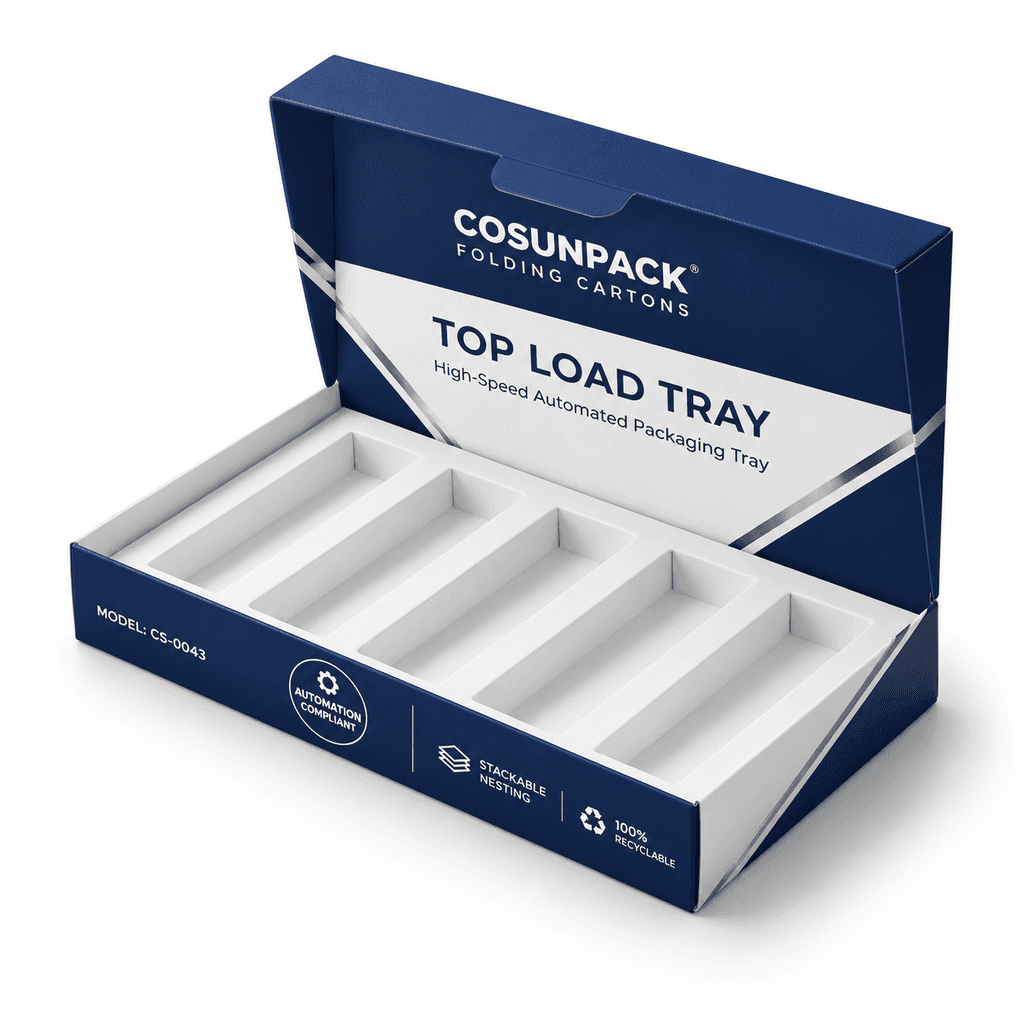
Top Load Tray
Top Load Tray: Printed paperboard packaging for retail display and product presentation. Confirm the closure, board, artwork, and finishing against your filling process.
Product Highlights
- Precise creases and tucks for smooth hand or machine filling
- Wide finish library: matte, gloss, soft-touch, foil, spot UV
- Ships flat; assembles quickly at filling or packing
- Board and coating selection reviewed for the intended product contact
- Structures engineered for auto-packing lines
- Premium paperboard with crisp, high-definition offset print
Craftsmanship & Production
Production steps and quality checks for this packaging format, coordinated across our printing workshops and specialized production network.
Customization Options
Review the available options for Top Load Tray with our team. These are the requirements to confirm:
- Board 200–450 gsm
- Tuck / lock / seal structures
- CMYK + Pantone print
- Lamination, foil, spot UV, soft-touch
- Window patches
Specification Planning — Top Load Tray
Review these material and process options for the selected structure. Your quotation confirms the exact specification for your project.
| Material | 200–450 gsm white/kraft paperboard, GC1/GC2 |
|---|---|
| Structure | Top Load Tray |
| Size Range | Dimensions or capacity confirmed against your product and selected tooling |
| Thickness | Material thickness or weight confirmed in the approved specification |
| Printing | Offset, CMYK + up to 2 Pantone spot colors |
| Finishing | Matte/gloss lamination, spot UV, foil, embossing, soft-touch |
| MOQ | Quoted per material, structure, print process, and order quantity |
| Sampling Lead Time | Confirmed after the artwork, structure, and tooling review |
| Production Lead Time | Confirmed after sample approval and production planning |
| Typical Applications | Retail, cosmetics, food, supplements, electronics |
Options shown for planning; final parameters are agreed in writing with your quotation and approved sample.
Before You Order
Top Load Tray FAQ
Practical answers on choosing the structure, avoiding common problems, and confirming the right specification for your product.
Why choose a top-load tray for a product set?
The open top lets packers place items downward into an arranged presentation. Provide the intended item positions and loading order, then trial the filled sample. Check that walls and dividers leave enough hand access while keeping the final arrangement orderly.
Technical references
Does a top-load tray need a separate cover?
That depends on whether it is used for open display, internal product organization or a closed retail pack. Define exposure and handling requirements first, then sample the intended lid, sleeve or outer package. An open tray does not provide top-surface containment by itself.
Technical references
How do we keep a mixed set from shifting in the tray?
Map each item's dimensions, weight and fragile contact areas, then trial dividers or fitted support as needed. Check the arrangement after handling and after one item is removed. Equal-looking compartments may not restrain products with very different shapes or centers of gravity.
Technical references
What matters when automating tray loading?
Share the loading equipment's motion, product orientation and tray-presenting requirements before approving the blank. Trial erected samples with the line team for wall interference and pickup access. A successful hand-packed mockup does not establish reliable machine loading.
Technical references
Have a different application? Share your requirements for this model.
One Partner for Your Complete Packaging
Source packaging from China with one team, from product-led development to delivery. Share your product or idea, component list, quantity, and destination—we will help define the next steps.