
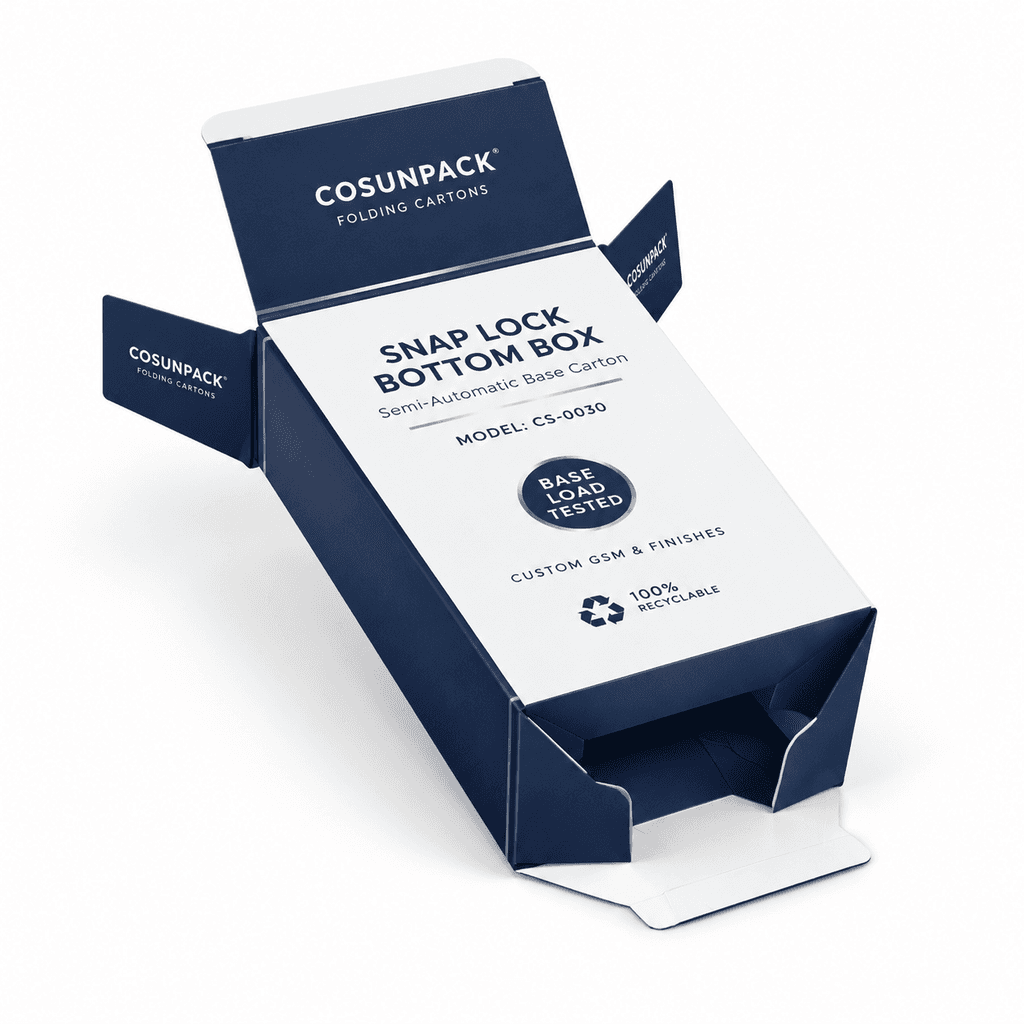
Tuck End Snap Lock Bottom
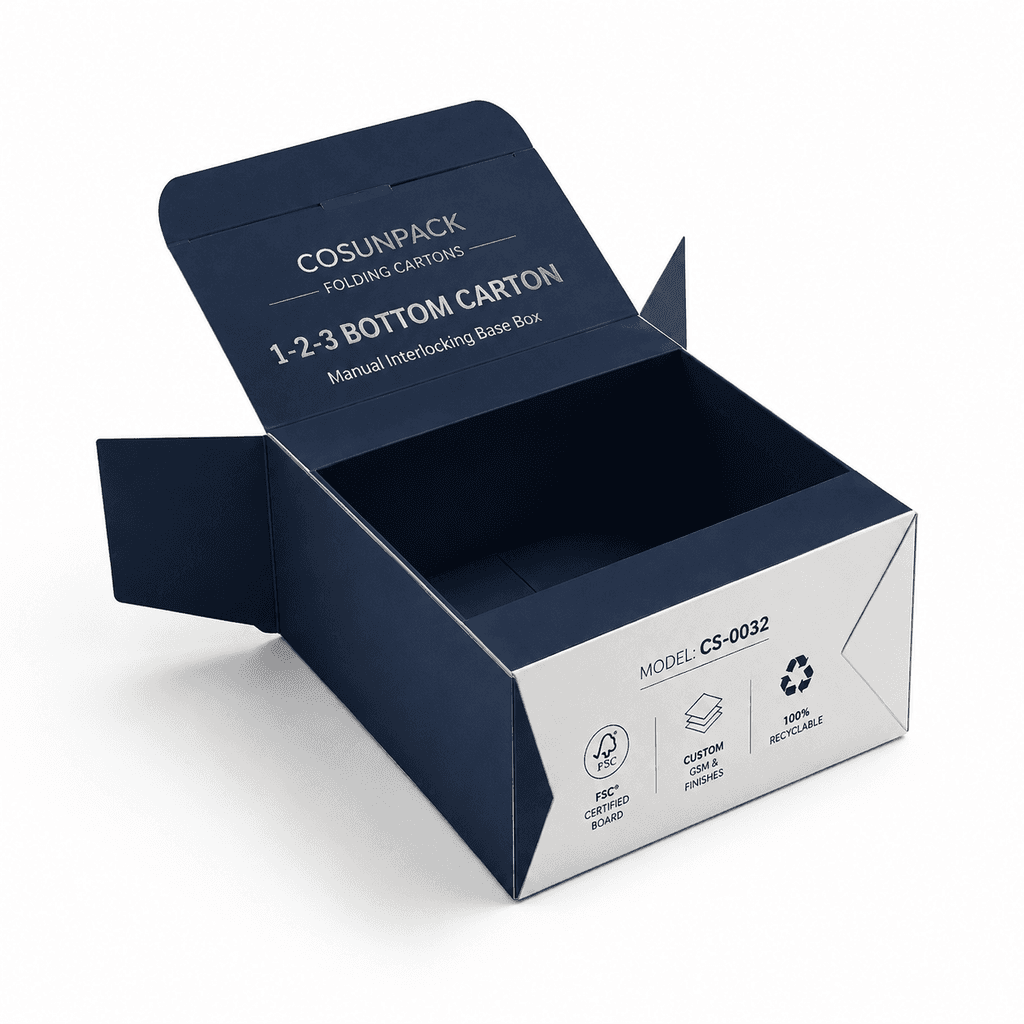
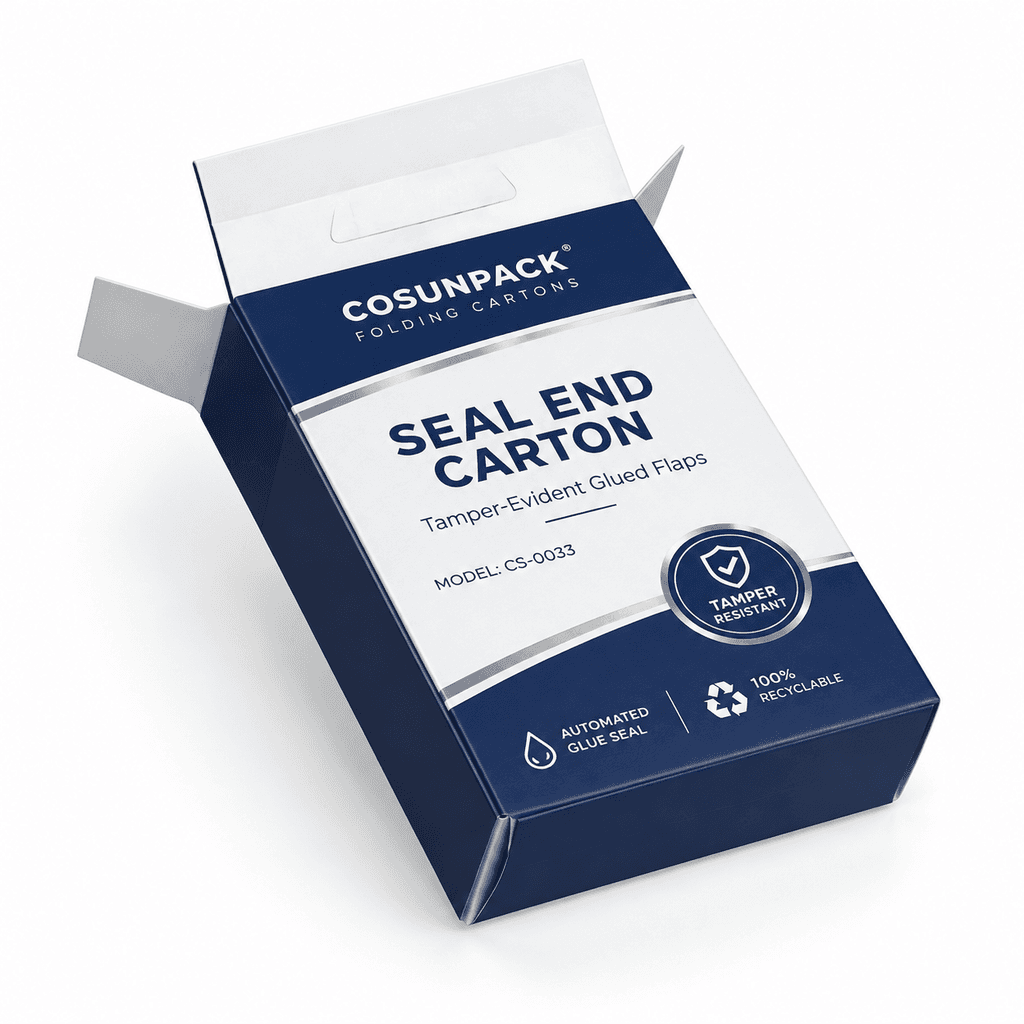
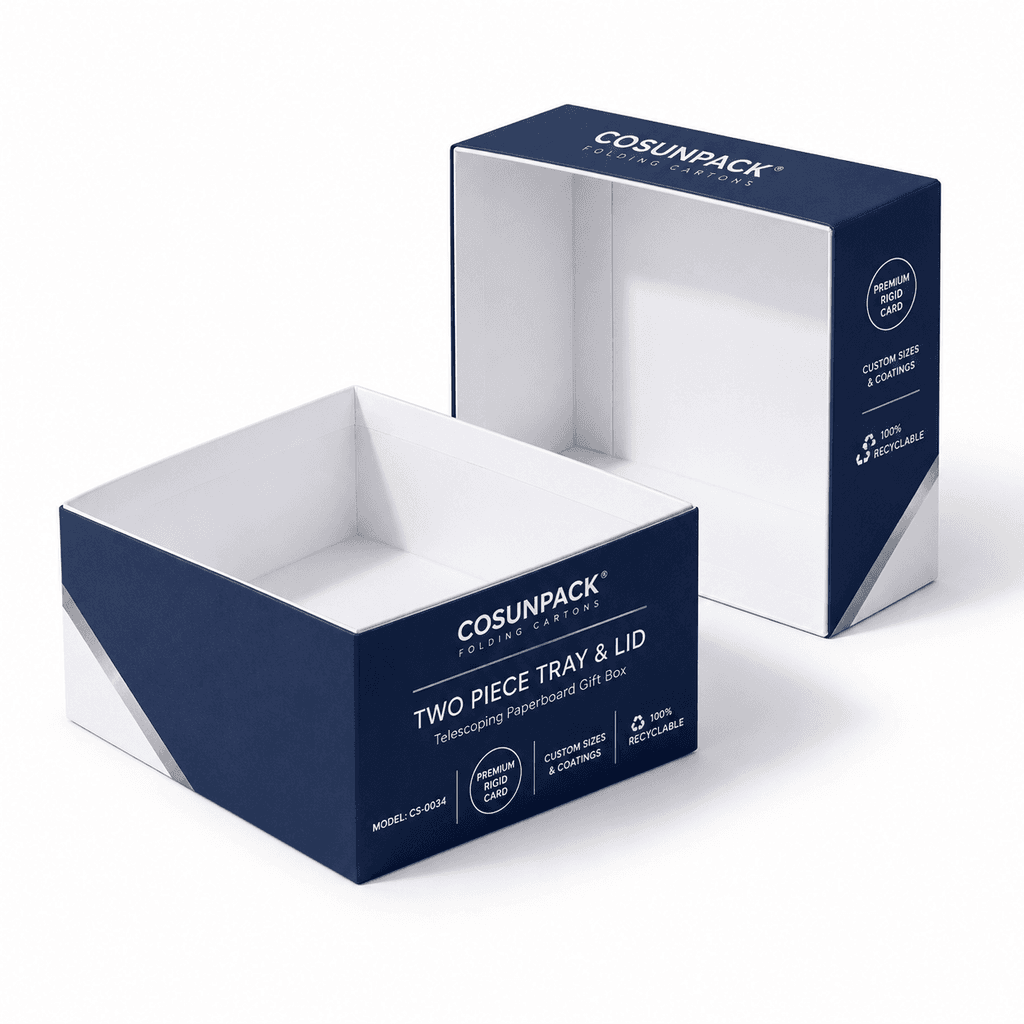
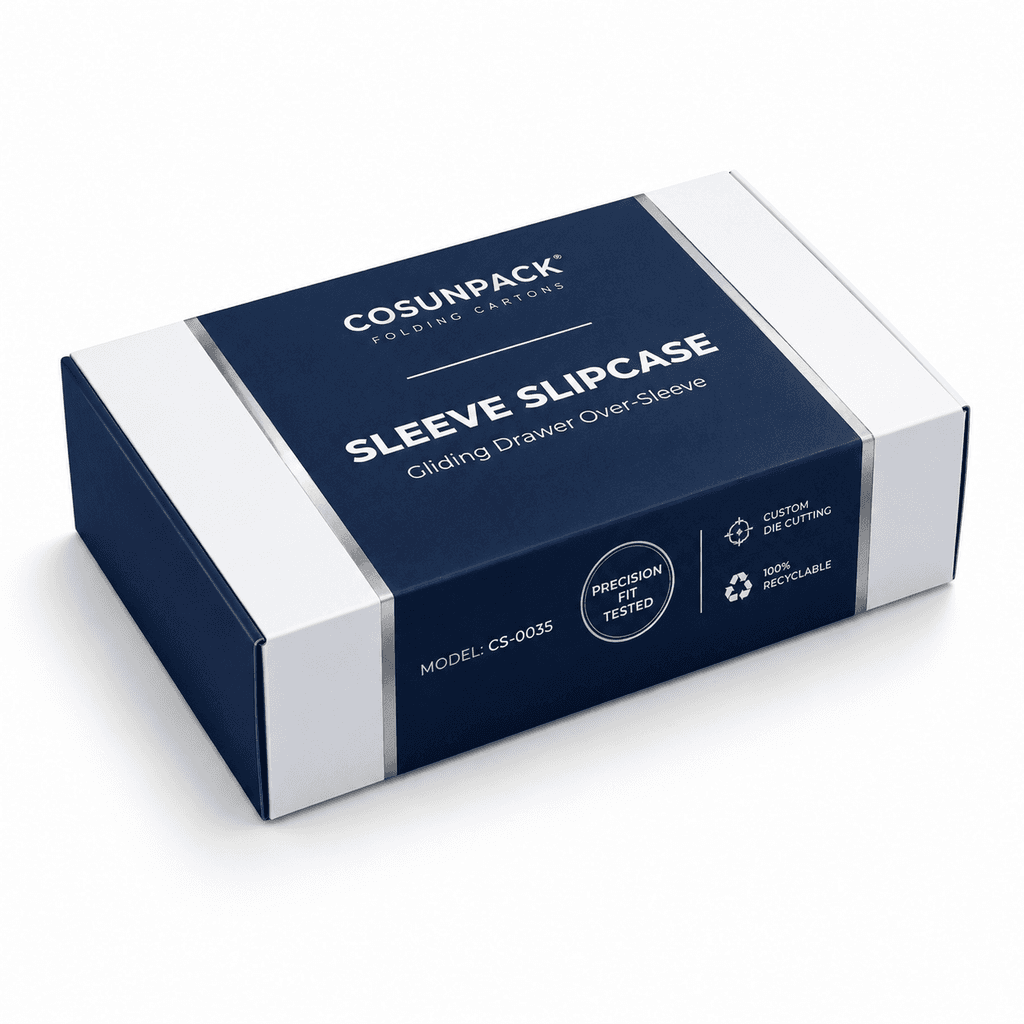
Tuck End Snap Lock Bottom: Printed paperboard packaging for retail display and product presentation. Confirm the closure, board, artwork, and finishing against your filling process.
Product Highlights
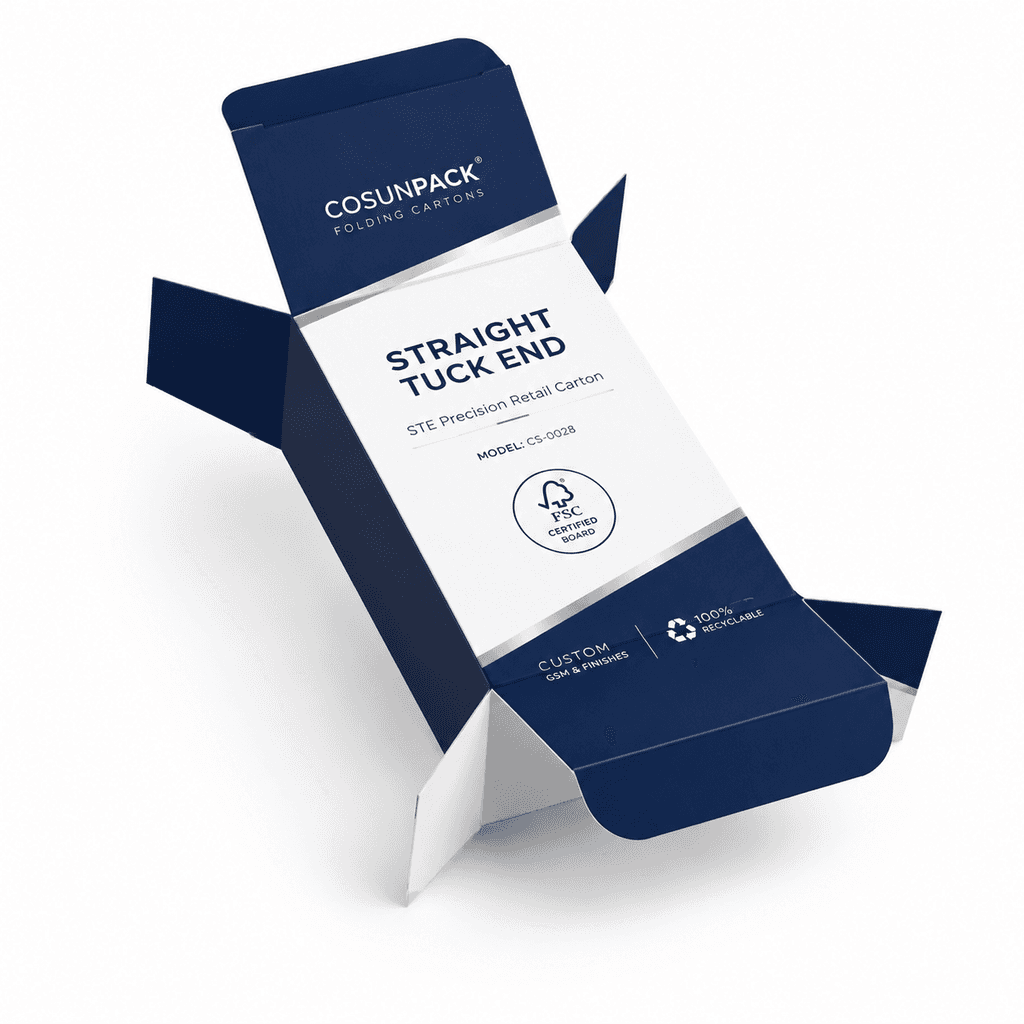
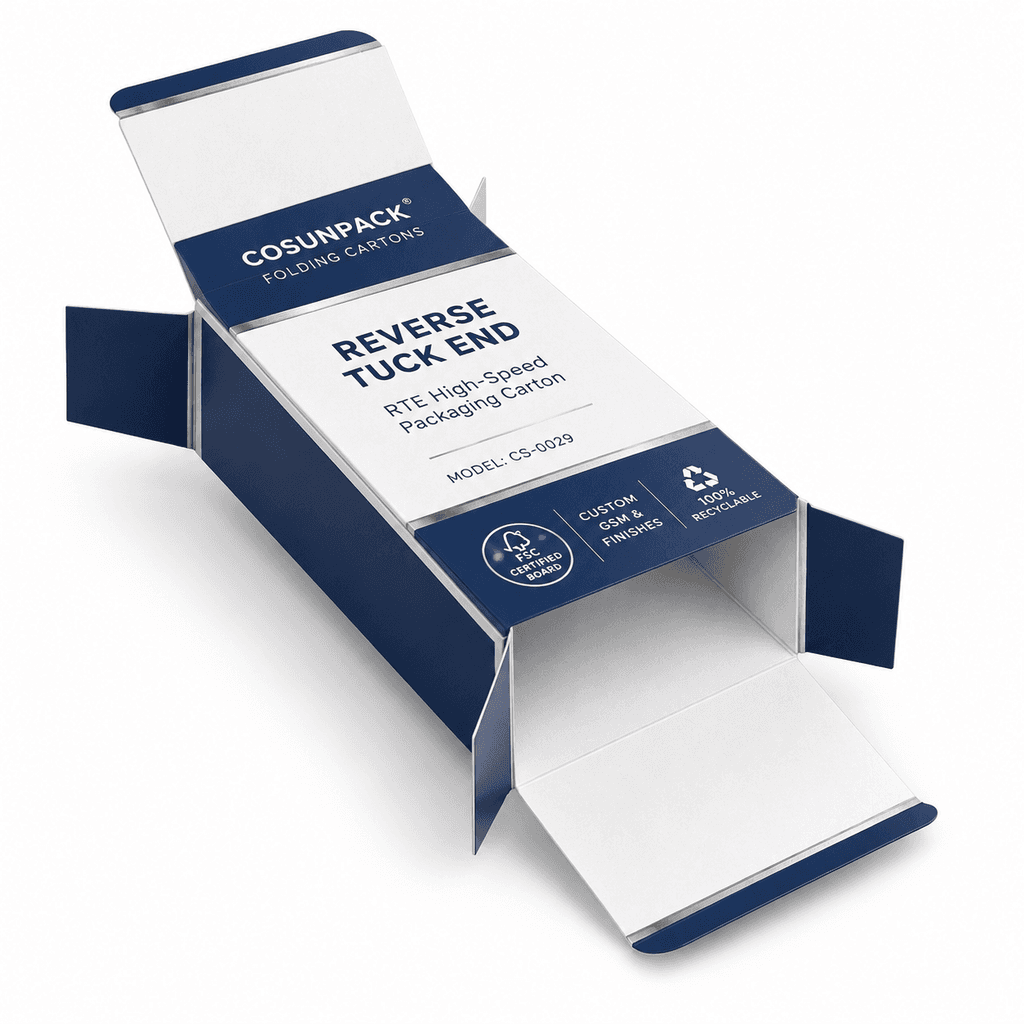
- Machine- and hand-fill friendly tuck closures
- Two tuck styles to fit your filling direction
- Premium paperboard with crisp, high-definition offset print
- Precise creases and tucks for smooth hand or machine filling
Craftsmanship & Production
Production steps and quality checks for this packaging format, coordinated across our printing workshops and specialized production network.
Customization Options
Review the available options for Tuck End Snap Lock Bottom with our team. These are the requirements to confirm:
- Board 200–450 gsm
- Tuck / lock / seal structures
- CMYK + Pantone print
- Lamination, foil, spot UV, soft-touch
- Window patches
Specification Planning — Tuck End Snap Lock Bottom
Review these material and process options for the selected structure. Your quotation confirms the exact specification for your project.
| Material | 200–450 gsm white/kraft paperboard, GC1/GC2 |
|---|---|
| Structure | Tuck End Snap Lock Bottom |
| Size Range | Dimensions or capacity confirmed against your product and selected tooling |
| Thickness | Material thickness or weight confirmed in the approved specification |
| Printing | Offset, CMYK + up to 2 Pantone spot colors |
| Finishing | Matte/gloss lamination, spot UV, foil, embossing, soft-touch |
| MOQ | Quoted per material, structure, print process, and order quantity |
| Sampling Lead Time | Confirmed after the artwork, structure, and tooling review |
| Production Lead Time | Confirmed after sample approval and production planning |
| Typical Applications | Retail, cosmetics, food, supplements, electronics |
Options shown for planning; final parameters are agreed in writing with your quotation and approved sample.
Before You Order
Tuck End Snap Lock Bottom FAQ
Practical answers on choosing the structure, avoiding common problems, and confirming the right specification for your product.
How is the snap-lock base assembled?
Approve the actual flap sequence on the structural drawing and trial it with your packers. The bottom relies on correct engagement of its cut flaps, so the packing instruction should show the final locked position before any product is loaded.
Technical references
Is the snap-lock bottom the same as a crash bottom?
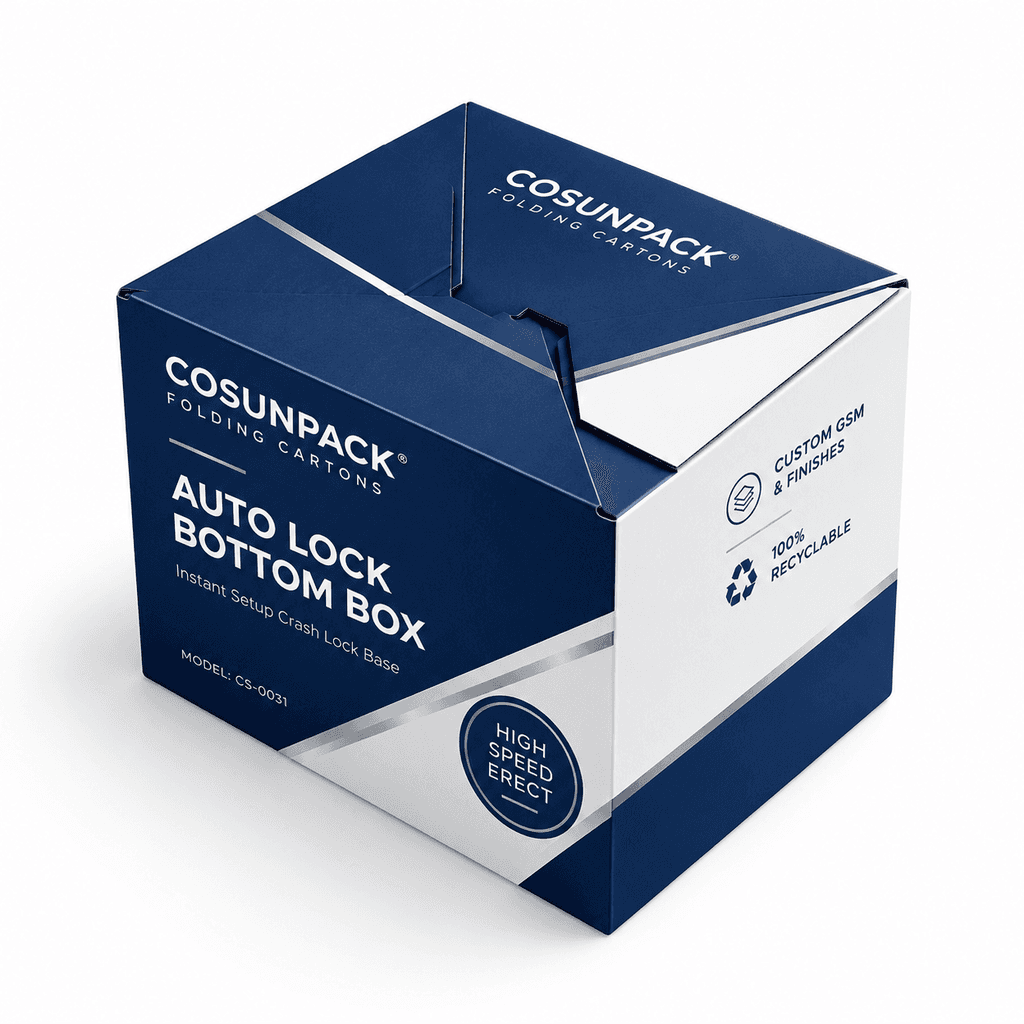
Confirm whether the base is manually interlocked or factory preglued; those are different packing operations even when sales terminology overlaps. Request an erection sample and compare the steps with your workflow before choosing the base or estimating its packing effort.
Technical references
Can the bottom support a heavy bottle?
Review the bottle's filled weight and contact area, then test a complete sample for base distortion and disengagement during handling. A positive locking feel is useful feedback during assembly, but it does not establish a safe working load for the carton.
Technical references
How does the tuck top interact with an internal insert?
Keep the insert and product clear of the top flap's entry path, including any leaflet resting above them. Close a filled sample repeatedly to check snagging or lid bowing. Resolve the structural clearance before approving decorative finishes on the top panel.
Technical references
Have a different application? Share your requirements for this model.
One Partner for Your Complete Packaging
Source packaging from China with one team, from product-led development to delivery. Share your product or idea, component list, quantity, and destination—we will help define the next steps.