
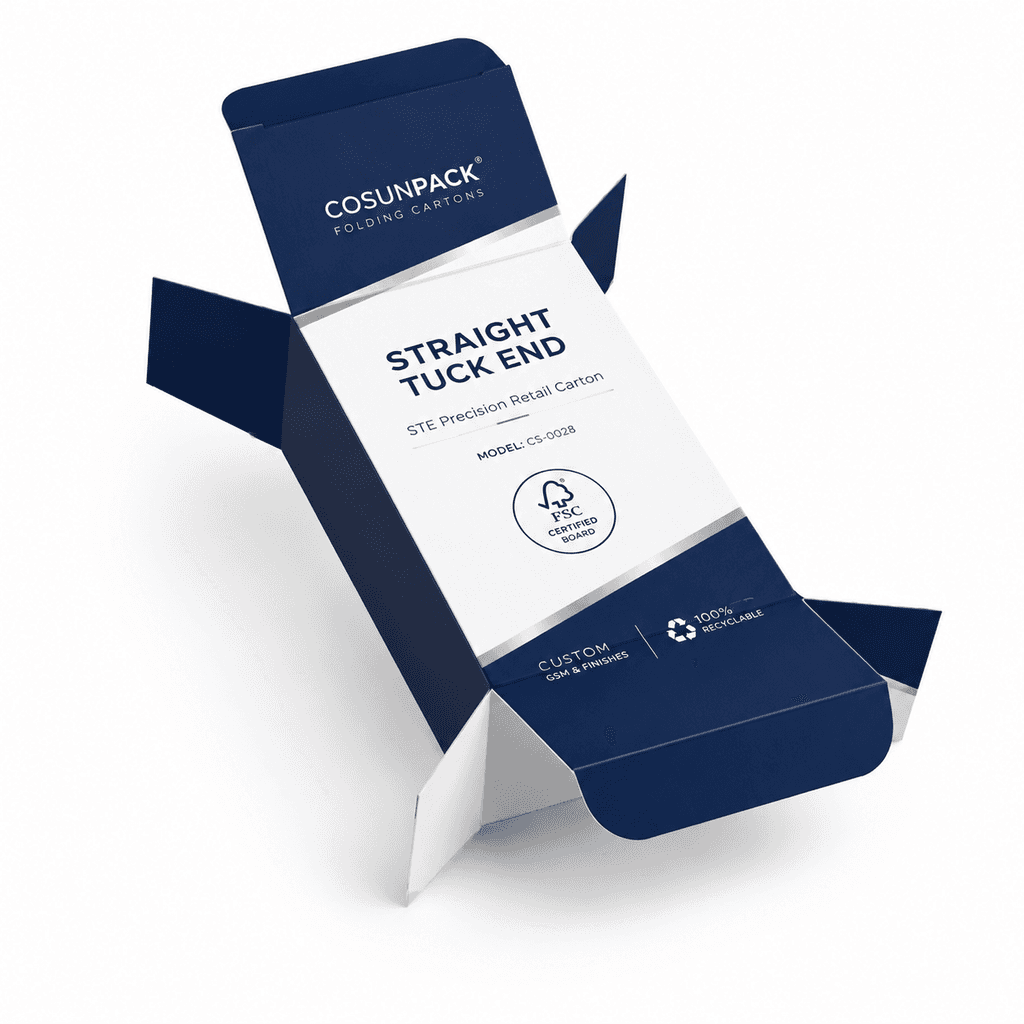
Straight Tuck End (STE)
Straight Tuck End (STE): Printed paperboard packaging for retail display and product presentation. Confirm the closure, board, artwork, and finishing against your filling process.
Product Highlights
- Machine- and hand-fill friendly tuck closures
- Two tuck styles to fit your filling direction
- Board and coating selection reviewed for the intended product contact
- Structures engineered for auto-packing lines
Craftsmanship & Production
Production steps and quality checks for this packaging format, coordinated across our printing workshops and specialized production network.
Customization Options
Review the available options for Straight Tuck End (STE) with our team. These are the requirements to confirm:
- Board 200–450 gsm
- Tuck / lock / seal structures
- CMYK + Pantone print
- Lamination, foil, spot UV, soft-touch
- Window patches
Specification Planning — Straight Tuck End (STE)
Review these material and process options for the selected structure. Your quotation confirms the exact specification for your project.
| Material | 200–450 gsm white/kraft paperboard, GC1/GC2 |
|---|---|
| Structure | Straight Tuck End (STE) |
| Size Range | Dimensions or capacity confirmed against your product and selected tooling |
| Thickness | Material thickness or weight confirmed in the approved specification |
| Printing | Offset, CMYK + up to 2 Pantone spot colors |
| Finishing | Matte/gloss lamination, spot UV, foil, embossing, soft-touch |
| MOQ | Quoted per material, structure, print process, and order quantity |
| Sampling Lead Time | Confirmed after the artwork, structure, and tooling review |
| Production Lead Time | Confirmed after sample approval and production planning |
| Typical Applications | Retail, cosmetics, food, supplements, electronics |
Options shown for planning; final parameters are agreed in writing with your quotation and approved sample.
Before You Order
Straight Tuck End (STE) FAQ
Practical answers on choosing the structure, avoiding common problems, and confirming the right specification for your product.
How do straight tuck ends affect artwork orientation?
Both end closures follow the same general direction, so agree on the front face and opening end before laying out graphics. Fold a printed dummy to confirm which edges show. The name alone does not identify every flap detail of the approved dieline.
Technical references
How much clearance is needed for the tuck flaps?
Leave usable space for the flaps to enter without pressing into the product or inner wrap. Trial the largest packed item in a structural sample and close both ends. Product dimensions alone will not show interference from the tuck path or dust flaps.
Technical references
Is a straight tuck base suitable for a glass jar?
Provide the filled jar weight, base shape and any protective insert before selecting the carton. Assess bottom retention and local support on a filled sample. A tuck closure should not be treated as a verified load-bearing base merely because it closes neatly.
Technical references
How do we avoid a cracked crease on an STE carton?
Use a crease and board combination suited to the required fold, then inspect a sample with the intended print and finish. Pay particular attention to dark artwork on the end folds. Check opening and reclosing before approving the appearance.
Technical references
Have a different application? Share your requirements for this model.
One Partner for Your Complete Packaging
Source packaging from China with one team, from product-led development to delivery. Share your product or idea, component list, quantity, and destination—we will help define the next steps.