
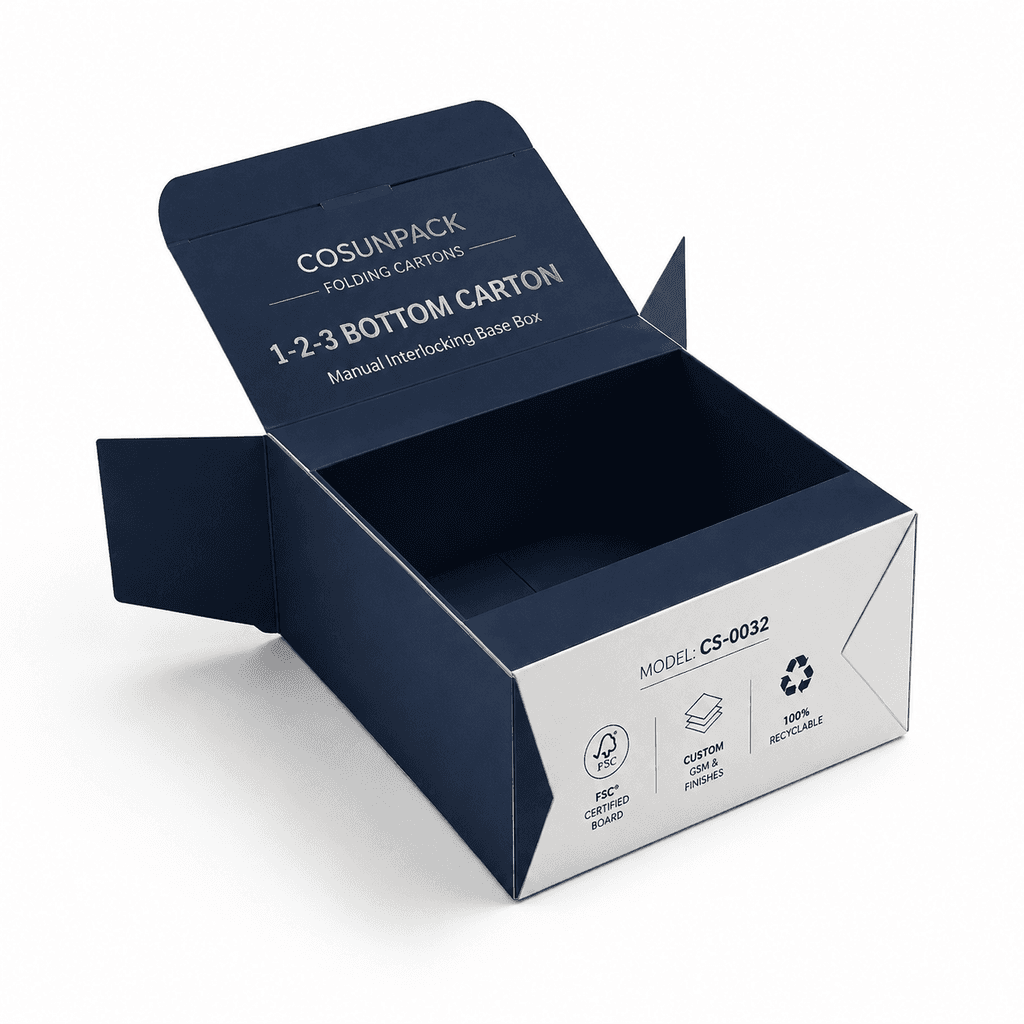
1 2 3 Bottom (Lock Bottom)
1 2 3 Bottom (Lock Bottom): Printed paperboard packaging for retail display and product presentation. Confirm the closure, board, artwork, and finishing against your filling process.
Product Highlights
- Tool-free bottom assembly with locking flaps
- Wide finish library: matte, gloss, soft-touch, foil, spot UV
- Ships flat; assembles quickly at filling or packing
- Board and coating selection reviewed for the intended product contact
Craftsmanship & Production
Production steps and quality checks for this packaging format, coordinated across our printing workshops and specialized production network.
Customization Options
Review the available options for 1 2 3 Bottom (Lock Bottom) with our team. These are the requirements to confirm:
- Board 200–450 gsm
- Tuck / lock / seal structures
- CMYK + Pantone print
- Lamination, foil, spot UV, soft-touch
- Window patches
Specification Planning — 1 2 3 Bottom (Lock Bottom)
Review these material and process options for the selected structure. Your quotation confirms the exact specification for your project.
| Material | 200–450 gsm white/kraft paperboard, GC1/GC2 |
|---|---|
| Structure | 1 2 3 Bottom (Lock Bottom) |
| Size Range | Dimensions or capacity confirmed against your product and selected tooling |
| Thickness | Material thickness or weight confirmed in the approved specification |
| Printing | Offset, CMYK + up to 2 Pantone spot colors |
| Finishing | Matte/gloss lamination, spot UV, foil, embossing, soft-touch |
| MOQ | Quoted per material, structure, print process, and order quantity |
| Sampling Lead Time | Confirmed after the artwork, structure, and tooling review |
| Production Lead Time | Confirmed after sample approval and production planning |
| Typical Applications | Retail, cosmetics, food, supplements, electronics |
Options shown for planning; final parameters are agreed in writing with your quotation and approved sample.
Before You Order
1 2 3 Bottom (Lock Bottom) FAQ
Practical answers on choosing the structure, avoiding common problems, and confirming the right specification for your product.
What does the 1-2-3 sequence refer to?
It describes a manually assembled bottom with flaps folded in an ordered locking sequence. Request the exact sequence on a sample and confirm the final engagement point. Train packers from that approved construction, since a similarly named base may use different details.
Technical references
How can we prevent missed bottom locks?
Include a simple view of the fully engaged base in the packing instruction and trial repeated assembly with actual operators. Check the bottom before filling, especially when a product hides the lock. Revise an ambiguous flap shape rather than relying only on operator force.
Technical references
Will small parts escape through the lock-bottom joints?
Inspect the erected bottom for openings and compare them with the smallest loose contents. A bag, tray or other inner containment may be needed. Test the filled sample after handling, since engaging the bottom does not create a continuous sealed surface.
Technical references
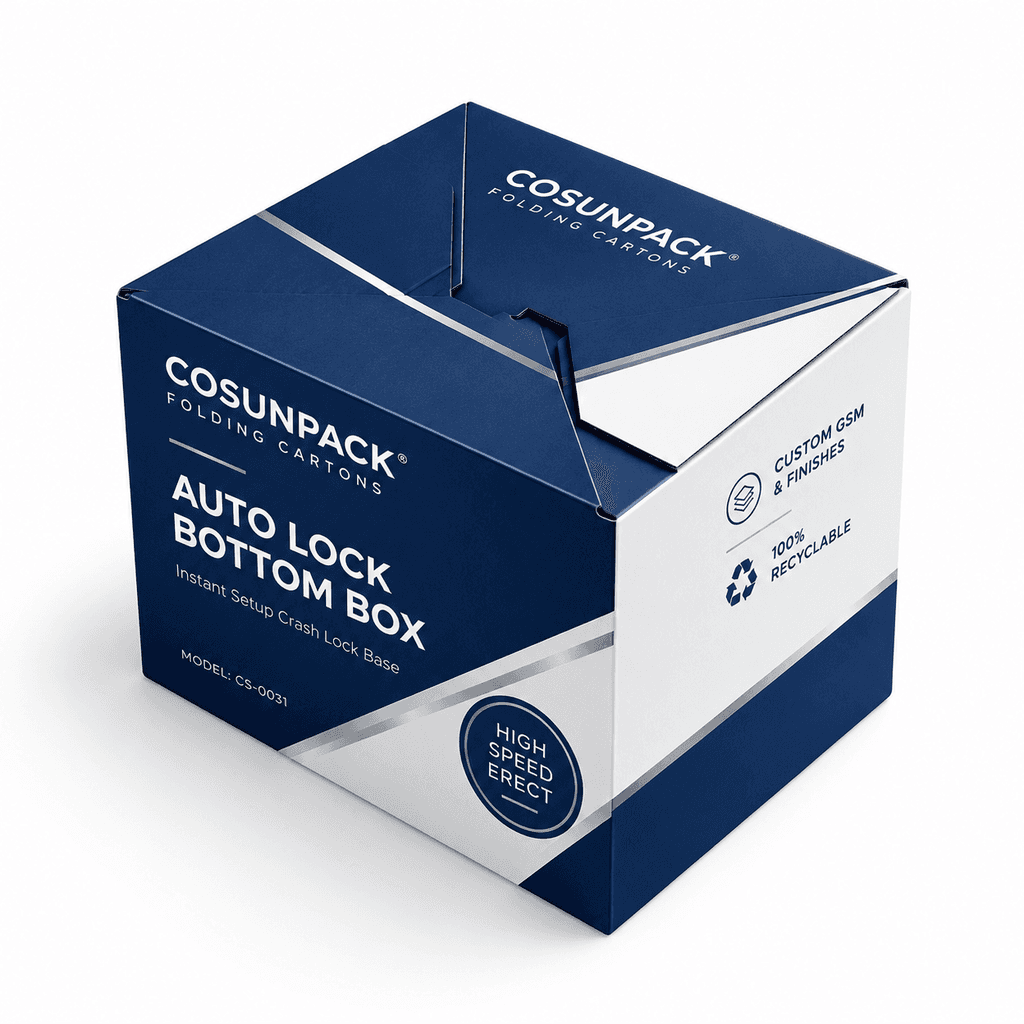
When should we compare this with an auto-lock carton?
Compare them when manual bottom assembly becomes a meaningful step in your workflow. Use the same product and packing arrangement to evaluate erection consistency and support. Approve the chosen sample's actual bottom behavior instead of assuming the two mechanisms have equal performance.
Technical references
Have a different application? Share your requirements for this model.
One Partner for Your Complete Packaging
Source packaging from China with one team, from product-led development to delivery. Share your product or idea, component list, quantity, and destination—we will help define the next steps.