
Flip Top Box
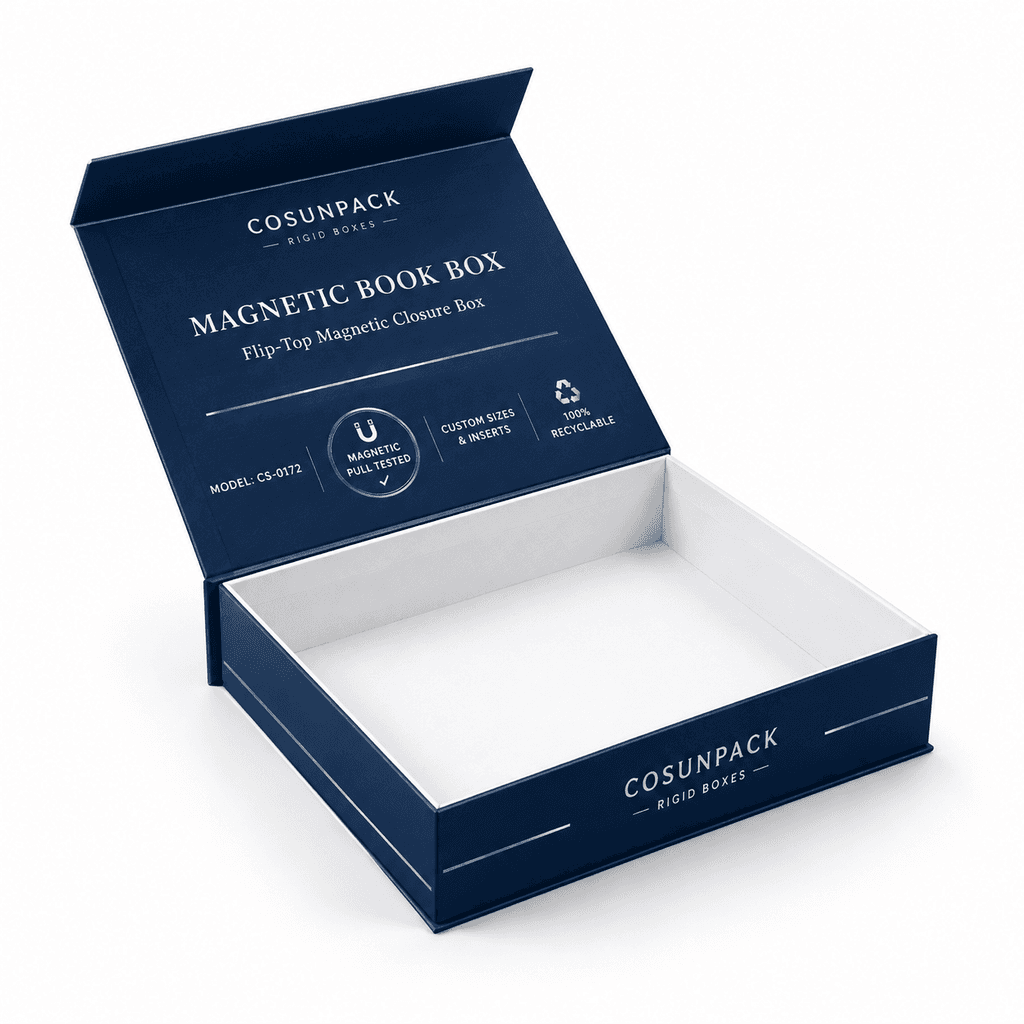
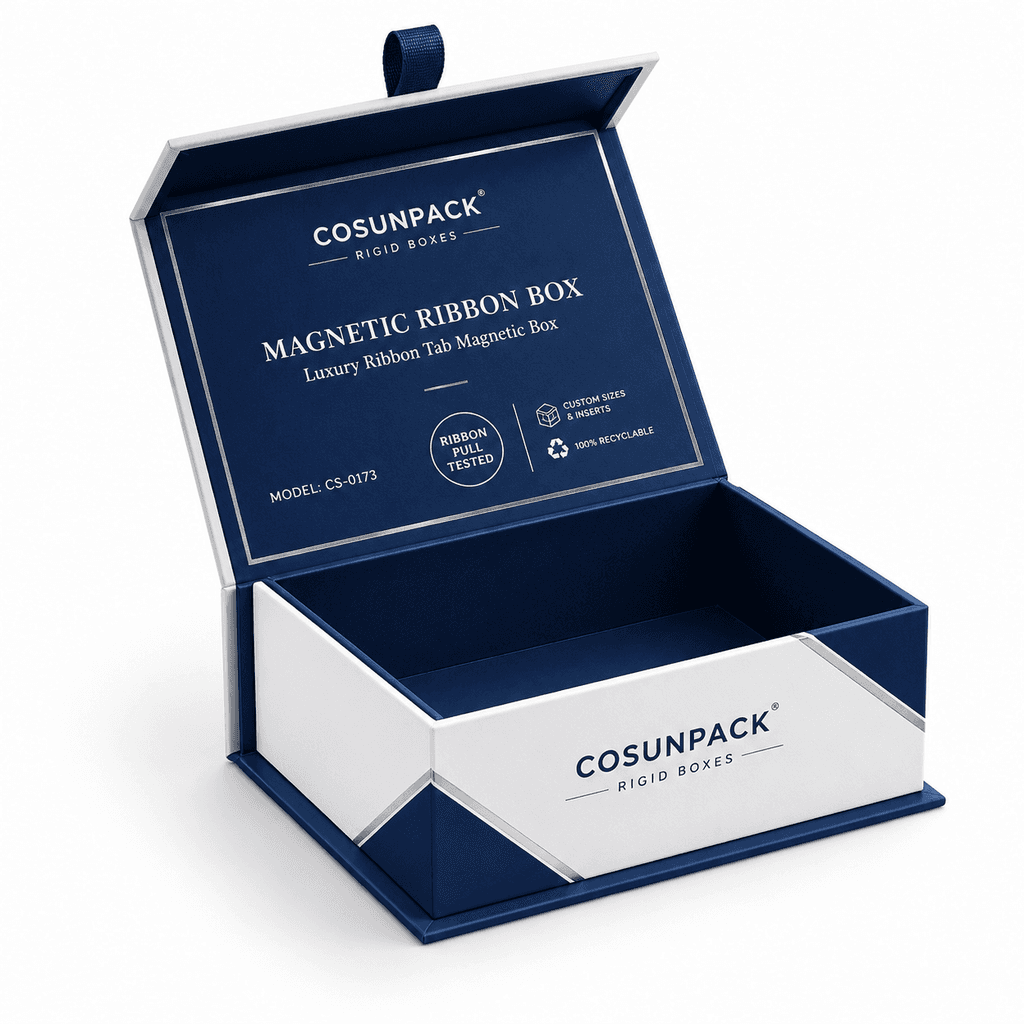
Flip Top Box: Rigid presentation packaging with a coordinated board, wrap, closure, and insert specification. Size and finish are developed around your product and presentation brief.
Product Highlights
- One-piece hinged lid—nothing to separate
- Board, wrap, and insert layout coordinated for the chosen rigid box format
- Grayboard construction with a substantial, gift-grade feel
- Wrap decoration with foil, soft-touch, and deep emboss options
Craftsmanship & Production
Production steps and quality checks for this packaging format, coordinated across our printing workshops and specialized production network.
Customization Options
Review the available options for Flip Top Box with our team. These are the requirements to confirm:
- Board thickness (1–3 mm)
- Wrap paper & print
- Foil / soft-touch / emboss
- Closure hardware
- Inserts & fitments
Specification Planning — Flip Top Box
Review these material and process options for the selected structure. Your quotation confirms the exact specification for your project.
| Material | 1–3 mm grayboard wrapped with 157 gsm art paper / specialty paper / fabric |
|---|---|
| Structure | Flip Top Box |
| Size Range | Dimensions or capacity confirmed against your product and selected tooling |
| Thickness | Material thickness or weight confirmed in the approved specification |
| Printing | Offset on wrap, CMYK + Pantone; deep mold embossing |
| Finishing | Foil stamping, soft-touch lamination, spot UV, magnetic closures, ribbon |
| MOQ | Quoted per material, structure, print process, and order quantity |
| Sampling Lead Time | Confirmed after the artwork, structure, and tooling review |
| Production Lead Time | Confirmed after sample approval and production planning |
| Typical Applications | Luxury retail, electronics, jewelry, gift sets |
Options shown for planning; final parameters are agreed in writing with your quotation and approved sample.
Before You Order
Flip Top Box FAQ
Practical answers on choosing the structure, avoiding common problems, and confirming the right specification for your product.
How is a flip-top lid different from a lift-off lid?
The flip top stays attached and moves through a hinge path, so access and packing should be reviewed with that motion in mind. Request a sample showing the exact flap and hinge arrangement before choosing the product orientation or inside-lid artwork.
Technical references
How do we keep the flip top from touching a tall cap?
Provide the complete product profile, including caps, bows or other projections, and trial the lid's travel on a filled sample. Check clearance while opening and closing, not just when fully shut. A projecting feature may need a lower insert position.
Technical references
Can the open flip top become a branded backdrop?
Plan the message at the intended viewing angle and check whether the lid remains in that position on its own. Trial the pack on the actual display surface. Keep key words clear of the hinge and the area blocked by the product.
Technical references
What should we evaluate for repeated flip-top use?
Use the final wrap, lining and hinge construction in a sample and repeat the expected opening motion. Inspect hinge whitening, lifting wrap and closure alignment. Agree on an acceptable cosmetic reference rather than claiming a fixed number of uses from the format.
Technical references
Have a different application? Share your requirements for this model.
One Partner for Your Complete Packaging
Source packaging from China with one team, from product-led development to delivery. Share your product or idea, component list, quantity, and destination—we will help define the next steps.