
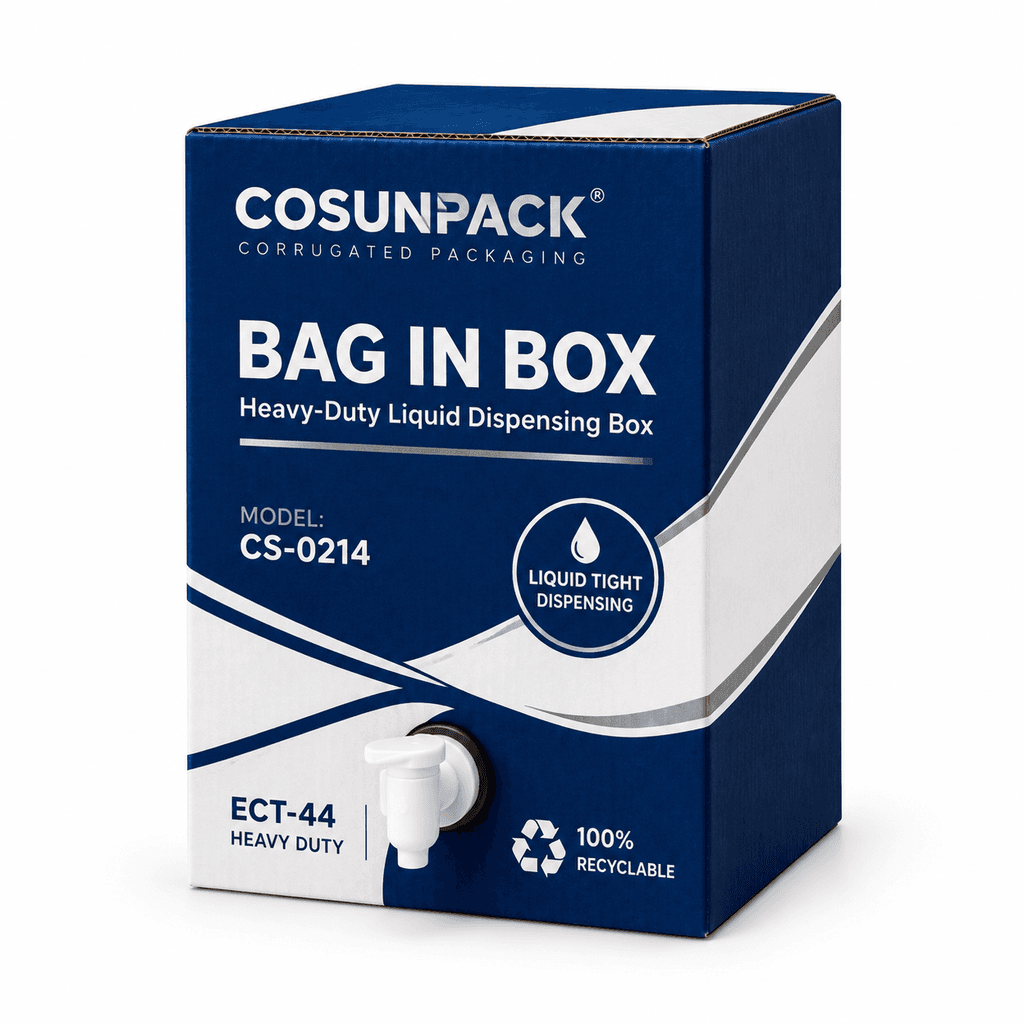
Bag in Box
Bag in Box: Corrugated packaging sized around your product, packing method, and shipping conditions. Board grade, print, and assembly details are confirmed in your quotation.
Product Highlights
- Dispensing bladder options reviewed against the product and shelf-life target
- Dispensing tap matched to the bladder and product
- Collapses flat as it empties—lighter freight than bottles
- Outer box carries full-color print at retail or bulk grade
Craftsmanship & Production
Production steps and quality checks for this packaging format, coordinated across our printing workshops and specialized production network.
Customization Options
Review the available options for Bag in Box with our team. These are the requirements to confirm:
- Flute type (E / B / C / BC)
- Dimensions & board grade
- Flexo / offset-litho / digital print
- Die-cut shapes & vents
- Coating & varnish
Specification Planning — Bag in Box
Review these material and process options for the selected structure. Your quotation confirms the exact specification for your project.
| Material | E / B flute corrugated outer; PE/PA/alu-foil inner bag |
|---|---|
| Structure | Bag in Box |
| Size Range | Dimensions or capacity confirmed against your product and selected tooling |
| Thickness | Material thickness or weight confirmed in the approved specification |
| Printing | Flexo (1–4 colors), offset-laminated, or digital |
| Finishing | Water-based or UV varnish, laminated litho label |
| MOQ | Quoted per material, structure, print process, and order quantity |
| Sampling Lead Time | Confirmed after the artwork, structure, and tooling review |
| Production Lead Time | Confirmed after sample approval and production planning |
| Typical Applications | Wine, sauces, syrups, beverage, liquid concentrates |
Options shown for planning; final parameters are agreed in writing with your quotation and approved sample.
Before You Order
Bag in Box FAQ
Practical answers on choosing the structure, avoiding common problems, and confirming the right specification for your product.
Does the corrugated box provide the liquid barrier?
The box supports the liquid bag, while the bag and fitment provide the primary containment system. Specify liquid type, filling conditions and required shelf performance for those components separately. A box specification alone cannot establish compatibility, barrier performance or leak resistance.
Technical references
What tap information is needed to design the opening?
Provide the actual fitment dimensions, operating motion and preferred dispensing orientation. Sample the box with a filled bag and check tap access, retention and whether a cup fits beneath it. Do not size the opening solely from an unfilled bag drawing.
Technical references
How can the box avoid pinching the filled bag?
Review the filling and insertion sequence with the bag supplier, including where folds and fitments sit. Check internal cuts, flap edges and closure contact on filled samples. Evaluate handling for abrasion or trapped film before approving the complete bag-and-box arrangement.
Technical references
What should be tested before a bag-in-box launch?
Test the specified bag, tap and box together with the actual liquid or a justified representative fill. Check dispensing, leakage, handle use and the expected delivery route. Agree on acceptance criteria for both containment and box appearance before reviewing the trial results.
Technical references
Have a different application? Share your requirements for this model.
One Partner for Your Complete Packaging
Source packaging from China with one team, from product-led development to delivery. Share your product or idea, component list, quantity, and destination—we will help define the next steps.