
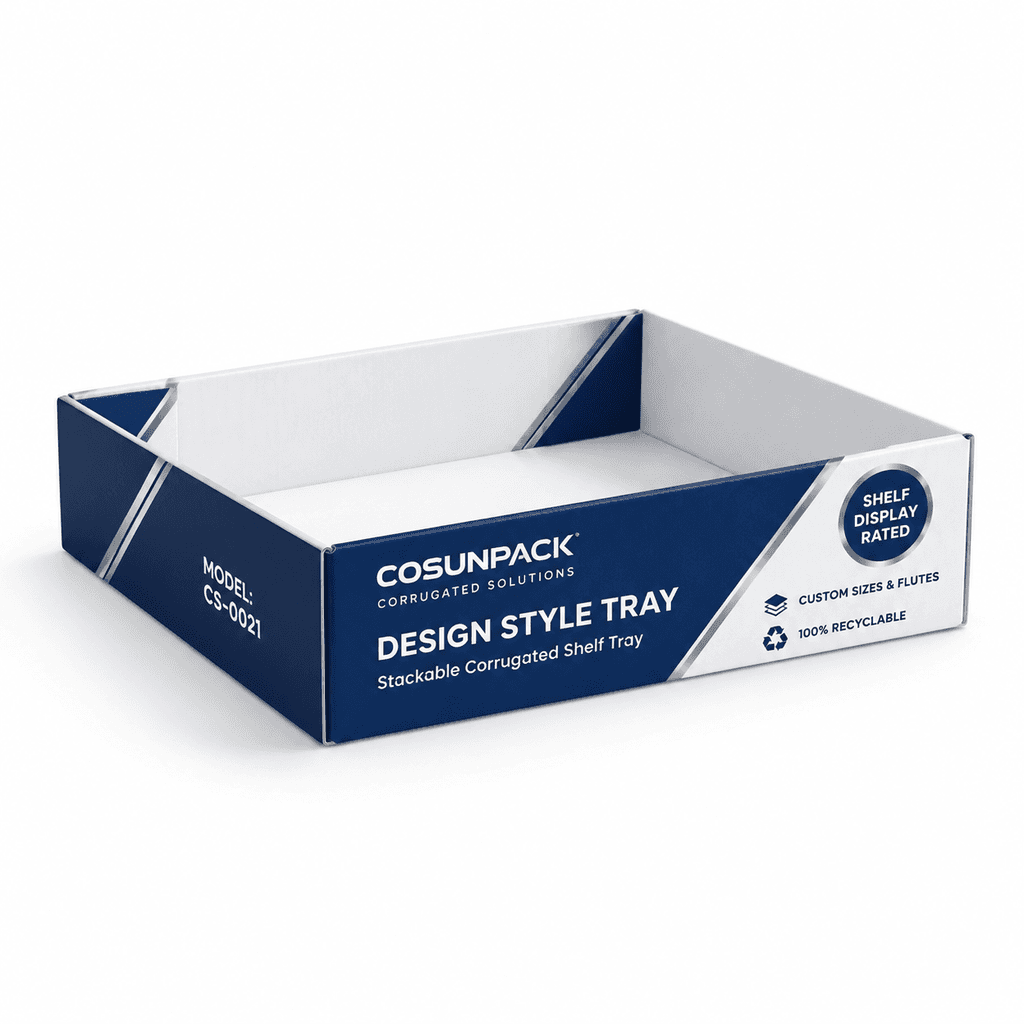
Design Style Tray
Design Style Tray: Corrugated packaging sized around your product, packing method, and shipping conditions. Board grade, print, and assembly details are confirmed in your quotation.
Product Highlights
- Shallow walls present product visibly
- Works standalone or as an insert inside a sleeve
- Sized to optimize pallet cube and freight cost
- Engineered flute selection (E/B/C/BC) balances strength and freight cost
Craftsmanship & Production
Production steps and quality checks for this packaging format, coordinated across our printing workshops and specialized production network.
Customization Options
Review the available options for Design Style Tray with our team. These are the requirements to confirm:
- Flute type (E / B / C / BC)
- Dimensions & board grade
- Flexo / offset-litho / digital print
- Die-cut shapes & vents
- Coating & varnish
Specification Planning — Design Style Tray
Review these material and process options for the selected structure. Your quotation confirms the exact specification for your project.
| Material | Corrugated board, E / B / C / BC flute, kraft or white top |
|---|---|
| Structure | Design Style Tray |
| Size Range | Dimensions or capacity confirmed against your product and selected tooling |
| Thickness | Material thickness or weight confirmed in the approved specification |
| Printing | Flexo (1–4 colors), offset-laminated, or digital |
| Finishing | Water-based or UV varnish, laminated litho label |
| MOQ | Quoted per material, structure, print process, and order quantity |
| Sampling Lead Time | Confirmed after the artwork, structure, and tooling review |
| Production Lead Time | Confirmed after sample approval and production planning |
| Typical Applications | Shipping, e-commerce, subscription, retail-ready packaging |
Options shown for planning; final parameters are agreed in writing with your quotation and approved sample.
Before You Order
Design Style Tray FAQ
Practical answers on choosing the structure, avoiding common problems, and confirming the right specification for your product.
Is a design style tray intended to stay open?
Confirm whether it will be an open handling tray, a display base or the bottom of a telescope set. That decision changes the need for a lid and product restraint. Review a filled sample in the actual use position before selecting wall height.
Technical references
How do we choose the tray wall height?
Balance the area needed to retain the product with the access needed to remove it. Provide the product's center of gravity and picking method, then trial the arrangement for tipping or snagging. A taller wall can obstruct access without resolving internal movement.
Technical references
Can the tray corners be formed without glue?
The exact corner construction must be shown on the dieline; different tray styles use different joining or locking methods. Request a folded sample and trial erection with packers. Confirm that the selected corner stays engaged when the loaded tray is lifted.
Technical references
What should we check before stacking filled trays?
Identify whether the upper tray rests on tray walls, products or a separate cover. Trial that arrangement with the intended contents and handling conditions. Do not assign a stack limit from the open-tray name or from the appearance of an empty sample.
Technical references
Have a different application? Share your requirements for this model.

One Partner for Your Complete Packaging
Source packaging from China with one team, from product-led development to delivery. Share your product or idea, component list, quantity, and destination—we will help define the next steps.